

YOUR GUIDE TO
Storing & Thawing Wild Seafood
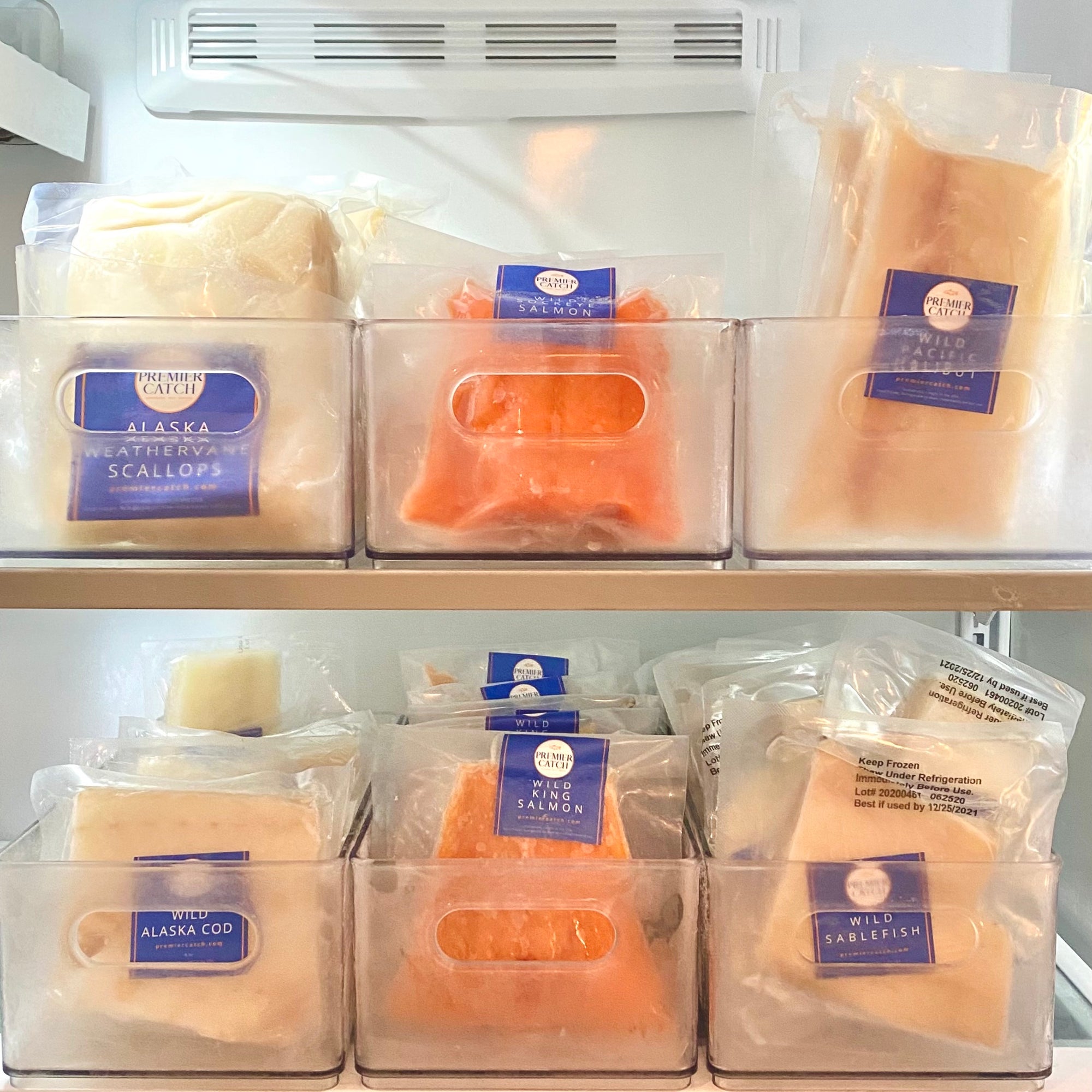
Proper storage and thawing help protect the flavor, texture and quality of your seafood. Use this guide for simple instructions from the moment your order arrives until you’re ready to cook.
Visit our Seafood Cooking Guide for methods, temperatures and tips, or browse our Wild Seafood Recipes for inspiration.
When Your Seafood Arrives
Bring your box inside and unpack it as soon as possible. Move frozen seafood directly to the freezer. It is normal for some or all of the dry ice to have evaporated by the time your order arrives.
If the seafood has softened but is still 40°F or below, it can safely be refrozen. If it arrives warm, damaged or you’re unsure about its condition, email orders@premiercatch.com within 48 hours and we’ll help.
How to Store Your Seafood
Most Premier Catch seafood should go straight into the freezer when it arrives. A few products, like canned albacore, are pantry-stable. Here’s how to store each type for the best quality.
Store frozen seafood at 0°F or below and keep it frozen until you’re ready to use it. For best quality, we recommend enjoying it within six months of purchase.
Keep smoked seafood and dips frozen until you’re ready to use them. Once thawed, keep refrigerated and follow the package guidance for best quality.
Store unopened cans in a cool, dry place such as a cupboard or pantry. For the best quality, enjoy within 3 years.
How to Thaw Seafood
For the best texture, thaw seafood slowly in the refrigerator. When you need it sooner, cold water is the next best option. Never thaw seafood on the counter or in warm water.
Because our products are packed differently, the exact method varies a little. Choose your seafood below.
For salmon, halibut, cod and sablefish:
Refrigerator: Remove the fish from its vacuum packaging, place it on a plate or in a covered container, and thaw in the refrigerator for 6–8 hours or overnight.
Quick thaw: Remove the fish from the vacuum package and place it in a leak-proof bag. Submerge in cold water until thawed, usually about 30–45 minutes depending on thickness. Cook promptly after quick thawing.
Pat dry before seasoning and cooking.
Our Weathervane Scallops are frozen on the boat in 1.25 lb blocks to protect their texture and quality.
For the full package: Cut open and remove the vacuum packaging, place the frozen block in a covered container, and thaw in the refrigerator overnight.
To use only part of the block: Keep the block cold and briefly soften the outside under cold water just until the scallops begin to separate. Remove the amount you need and return the still-frozen remainder to the freezer in a well-sealed bag. Finish thawing the scallops you plan to cook in the refrigerator.
Raw shrimp: Thaw in the refrigerator overnight, or place in a leak-proof bag and thaw in cold water for about 20–30 minutes. Drain and pat dry before cooking.
Cooked shrimp: Thaw in the refrigerator, keep chilled, and serve cold or add to recipes only long enough to warm through.
Wild Alaska Spot Prawns are frozen at sea in a block, which is completely normal and helps protect their quality.
For the full package: Thaw in the refrigerator overnight.
To use only part of the block: Briefly run the frozen block under cold water just until the outer prawns loosen. Separate what you need, return the remaining still-frozen prawns to the freezer in a well-sealed bag, and finish thawing your portion in the refrigerator.
King Crab and Dungeness Crab are fully cooked. Thaw in the refrigerator overnight, then serve chilled, at room temperature, or warm gently.
Crab meat: Thaw in the refrigerator and keep chilled until you’re ready to use it.
Need it faster? Place the crab in a leak-proof bag and thaw under cold running water.
Thaw smoked salmon, smoked sablefish and salmon dip in the refrigerator overnight. Keep refrigerated after thawing and enjoy promptly, following any package-specific guidance.
Once Your Seafood Is Thawed
Once thawed, keep seafood refrigerated at 40°F or below until you’re ready to cook or serve it. Most raw fish and shellfish are best used within 1–2 days.
Raw fish and shellfish: Enjoy within 1–2 days of thawing.
Cooked seafood: Refrigerate and enjoy within 3–4 days.
Smoked and prepared seafood: Follow the package guidance and enjoy promptly after thawing.
Yes, in many cases. If seafood is still 40°F or below, it can safely be refrozen. Seafood thawed in the refrigerator can also be refrozen, although you may notice some change in texture.
If seafood was fully thawed using cold water, cook it before refreezing.
Remove fish portions from their vacuum packaging before thawing. Place the fish on a plate or in a covered container in the refrigerator.
For a quick cold-water thaw, move the fish to a separate leak-proof bag first.
Ready to Cook?
Head to our Seafood Cooking Guide for simple methods, doneness cues and temperatures, or browse hundreds of Wild Seafood Recipes for inspiration.


